This is a letter from Mark one of the Directors of ROC and also a resident of Redruth outlining the case for a Pesticide Free Redruth:
Dear Redruth Town Clerk,
As a Redruth resident and as a Director of Resilient Orchards Cornwall CIC I am extremely concerned that Redruth Town Council seems to have been presented with a difficult choice by Cornwall Council of either accepting the use of Glyphosate based weed killers in the Town or having to bear additional cost risks.
Cornwall Council has policies around protecting human health and the environment so it seems a bizarre and counterproductive choice for them to promote reintroduction of harmful chemicals into our environment which pose risks to human and animal health and to nature.
Risks to Human Health
The primary concern for humans revolves around long-term exposure, particularly for agricultural workers, though residential use also carries risks.
- Cancer Concerns (Lymphoma): The International Agency for Research on Cancer (IARC) classifies glyphosate as a “probable human carcinogen.” This is largely based on evidence linking it to Non-Hodgkin Lymphoma (NHL).
- Neurotoxicity: Recent systematic reviews suggest that glyphosate may cross the blood-brain barrier. Exposure has been linked to:
- Oxidative stress and neuroinflammation.
- Potential links to Parkinson’s disease (recognized by the French government in compensation cases for farmers).
- Developmental concerns in children, including potential increased risks for autism spectrum disorders when exposed prenatally or in early childhood.
Acute Symptoms: Short-term exposure (inhalation or skin contact) can cause:
- Skin and eye irritation.
- Nasal and throat irritation.
- Respiratory issues, including asthma symptoms
Risks to Animal Health
Animals often face higher exposure levels because they are physically closer to treated surfaces (grass, soil) and may ingest the chemical while grooming.
Domestic Pets (Dogs and Cats)
- Gastrointestinal Distress: Ingesting small amounts (e.g., licking paws after walking on treated grass) can cause vomiting, diarrhea, and hypersalivation.
- Organ Health: Prolonged or repeated exposure has been linked to long-term kidney and liver effects in dogs.
Risks to nature: Wildlife and Pollinators
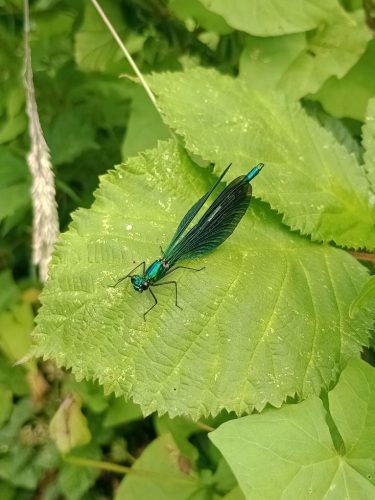
- Honeybees: Glyphosate is particularly damaging to bees. It disrupts their gut microbiome, making them more susceptible to pathogens. It also impairs their cognitive functions, specifically their ability to navigate back to the hive and their memory for foraging.
- Amphibians: Studies have shown that glyphosate-based herbicides can be highly toxic to frogs and salamanders, often causing developmental deformities or death in tadpoles due to the surfactants (spreading agents) used in the formula
Financial Aspects
The argument for use of Glyphosate based chemicals to control weeds in public areas is no doubt founded on the perception that this is a low cost solution compared to less harmful alternative methods. This is a particularly shallow way of looking at it though. Think of the costs for the resident whose pet gets ill as a result of ingesting weed killer. Think of the impact on the life of the person who becomes ill and can’t work or access education for a period of time, not to mention the extra costs that this will generate for the NHS and the DWP. Have the legal risks to the Council been considered if this practice causes harm and compensation is sought?
Practical Aspects
For Council employees and contractors to safely and compliantly use hazardous and potentially harmful chemicals they must be properly trained and have appropriate PPE which can be costly. Spraying can only be safely done when the weather conditions are conducive, especially when wind levels are low. Wind levels are rarely low in Redruth and are subject to fluctuations throughout the course of a day. How then, in practice, will the Council be able to ensure that operatives only spray these chemicals when the wind is low? What measures will be put in place to prevent continued spraying if the wind picks up mid-shift? And how can work schedules be managed efficiently to avoid operatives continually stopping and starting tasks?
Vision for our Townscape
Groups like Incredible Edible Redruth and many of the businesses in town are working hard to create a Townscape that is inviting, green, healthy and pleasant to be in. It has been great to see the growing boxes in the town centre and recently the potted plants and flowers that the Bond Street Collective have put out. If Glyphosate weed killers are being used will these initiatives have to stop? Will the salad leaves in the growing boxes still be safe for people to eat?
Since the dawn of time, the majority of humans have has an instinct to try and control and order the natural world around them. I get that; I weed my garden. If we allow this to be taken to extremes though we will be have public spaces which are no longer habitable by nature; sterile and devoid of life. Perhaps in future we could try and learn to be more tolerant of weeds – or perhaps more accurately “plants that are in the wrong place” – appearing in our public spaces.
Community Orchards
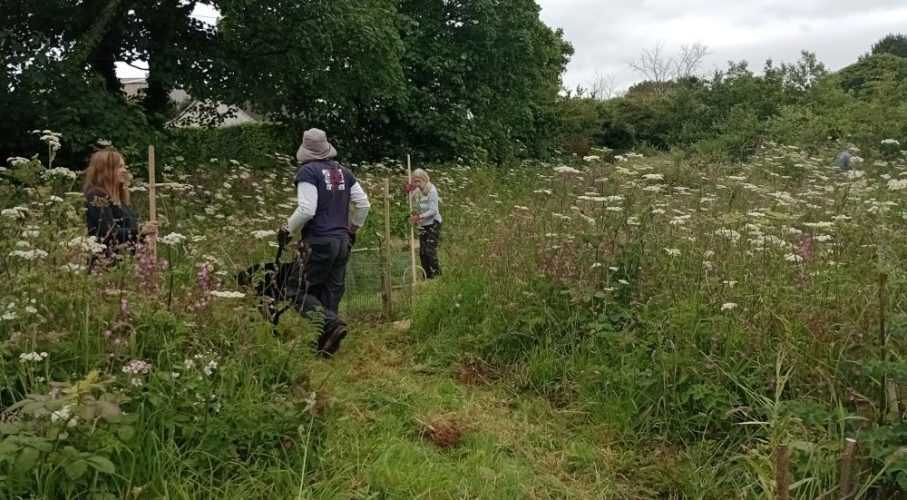
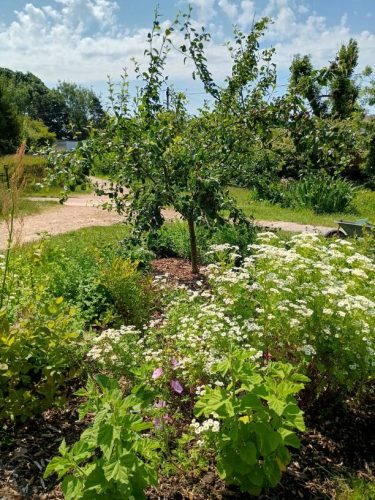
Resilient Orchards Cornwall CIC is very proud to have worked in partnership with Redruth Town Council, Cornwall Council and Cormac over recent years and together we have created 3 fantastic community orchards in our Town. These are spaces looked after by volunteers in the community and over the years, if we look after them properly, they will deliver value to the community by providing spaces for people to meet, enjoy the natural world and supply healthy food for those who need it. Orchards depend on natural pollinators to survive and thrive. It is therefore hugely disappointing that Cornwall Council is now seemingly choosing to impose harmful chemicals into our environment which will threaten the success of the community orchards in Redruth that they themselves have participated in creating.
I hope these thoughts help the discussion.
With best wishes
Mark Ellis